
What is Vision Insurance?
 The cost of routine eye exams and prescription eyewear can be of real concern, especially for large families. In many cases, vision insurance can lower these annual expenses.
A vision insurance policy is not the same as health insurance. Regular health insurance plans protect you against financial losses due to unexpected eye injuries or disease. Vision insurance, on the other hand, is a wellness benefit designed to provide routine eye care, prescription eyewear and other vision-related services at a reduced cost.
Where can I get vision insurance?
Group vision insurance can be obtained through […]
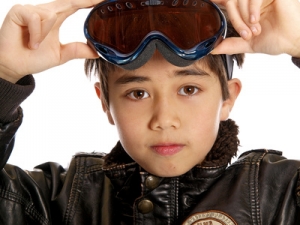 Seeing “20/20” isn’t the only measure of good vision. Visual acuity (20/20, etc.) is certainly important. But good vision involves a set of several skills, including depth perception, peripheral visual field awareness, eye-hand coordination and more.
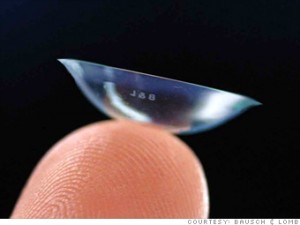 Good vision is critical for nearly every sport. To determine the effect of visual acuity on sports performance, British optometrist Geraint Griffiths and others in 2003 tested the performance of Wimbledon tennis players and UK national clay pigeon shooting champions when their vision was blurred with special goggles. Overall, the tennis players and marksmen showed a 25% worsening of performance when their visual acuity was only slightly blurred by the goggles.
 Today, sports eyewear can be spotted on almost anyone who picks up a ball, bat, racquet or stick – whether they play in the major leagues or the Little League. Fortunately, coaches, parents and players now realize that wearing protective eyewear for sports pays off in several ways. The risk of eye damage is reduced or eliminated, and the player’s performance is enhanced by the fact that they see well. In fact, many clubs today do not permit their members to participate without wearing proper eye
 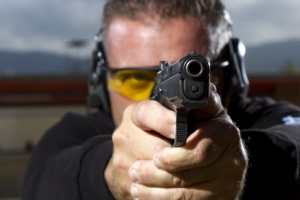 Hunters and gun enthusiasts require eye protection, whether at a shooting range or in the woods. All firearms have a certain amount of recoil, and many shooting activities take place outdoors, where wind, sun, dust, tree branches and brush all can cause eye injuries.
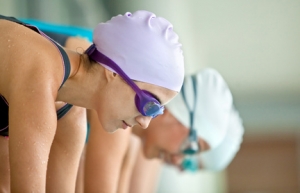 When they’re in the water, swimmers and scuba divers who wear eyeglasses or contact lenses could benefit from prescription swim goggles.
 Just as our physical strength decreases with age, our eyes also exhibit an age-related decline in performance – particularly as we reach our 60’s and beyond.
 Many normal, age-related problems affecting vision can be addressed with practical solutions, such as extra lighting for reading recipes or tinkering with garage projects.
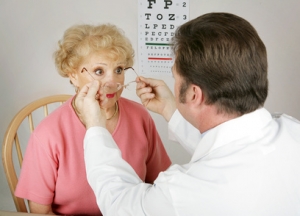 Sight-threatening eye problems affect one in six adults aged 45 and older. And the risk for vision loss increases with age. In fact, a recent American Academy of Ophthalmology (AAO) report estimates that more than 43 million Americans will develop age-related eye diseases by the year 2020.
 Once we reach our mid-40s, presbyopia – the normal, age-related loss of flexibility of the lens inside our eye – makes it difficult for us to focus on near objects. In the past, reading glasses were the only option available to contact lens wearers who wanted to read a menu or do other everyday tasks that require good near vision.