
Multifocal Contact Lenses
 Once we reach our mid-40s, presbyopia – the normal, age-related loss of flexibility of the lens inside our eye – makes it difficult for us to focus on near objects. In the past, reading glasses were the only option available to contact lens wearers who wanted to read a menu or do other everyday tasks that require good near vision.
But today, a number of multifocal contact lens options are available for you to consider. Multifocal contact lenses offer the best of both worlds: no glasses, along with good near and […]
 Just as eyeglass frames have continually changed to reflect the latest fashions, eyeglass lenses also have evolved. This is particularly true for multifocal lenses – eyeglass lenses with more than one power to help those of us over age 40 deal with the normal, age-related loss of near vision called presbyopia.
 An occupational lens is a type of multifocal that is specifically suited for performing a particular job or hobby. Glasses with these lenses are special-purpose
  Progressive addition lenses (also called progressives or PALs) are the most popular multifocal lenses sold in the United States. Sometimes called “no-line bifocals,” these line-free multifocals provide a more complete vision solution than bifocals. Instead of having just two lens powers like a bifocal – one for distance vision and one for up close – progressives have a gradual change in power from the top to the bottom of the lens, providing a range of powers for clear vision far away, up close and everywhere in between.
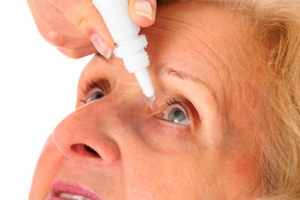 Studies show that more than 14% of older Americans have dry eye syndrome. If you are 50 or older and female, your chance of developing dry eye is even greater. In fact, the American Academy of Ophthalmology says hormonal changes make older women twice as likely as older men to develop dry eye and accompanying symptoms such as eye irritation and blurred vision.